

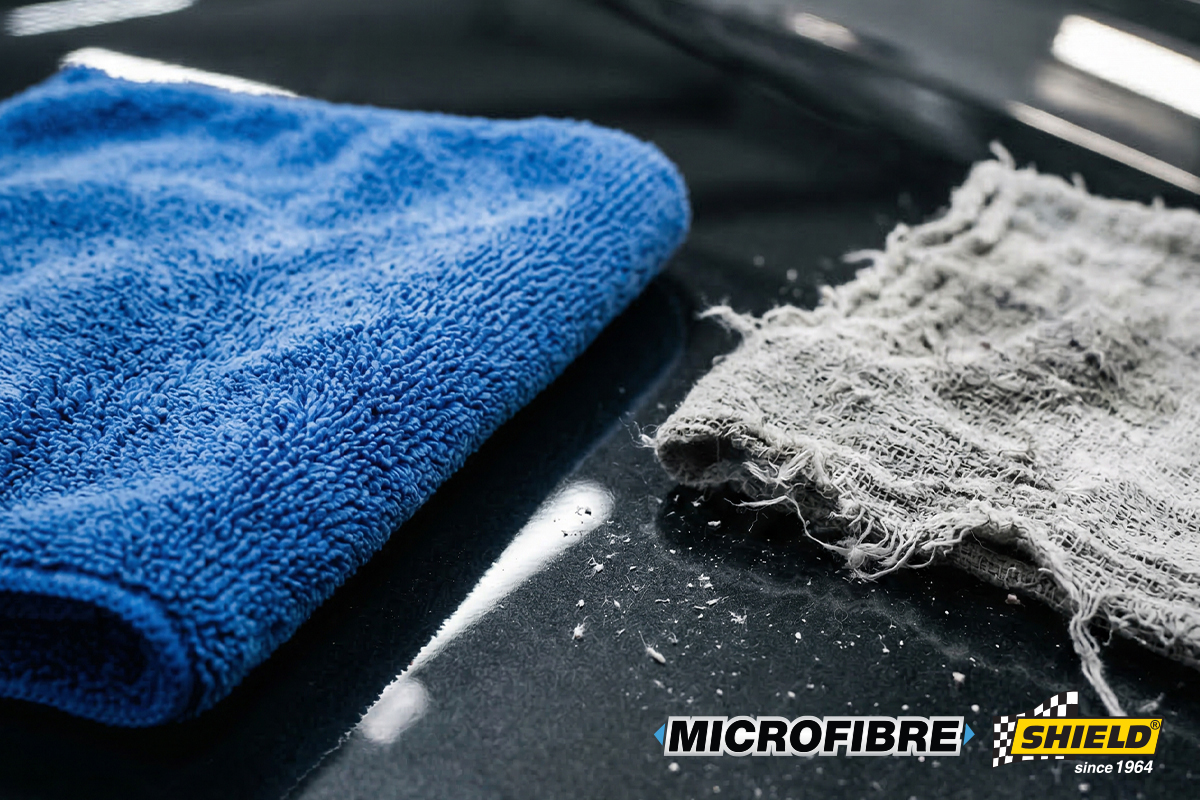
Choosing the right cloth for cleaning your car can make a significant difference to the final result. While cotton cloths and paper towels have traditionally been used for cleaning, microfibre cloths for car cleaning have become the preferred option for achieving safe, streak-free results.
Understanding the differences between these materials helps explain why microfibre has become the industry standard in automotive care and detailing.
Cotton Cloths
Cotton cloths are commonly used for general cleaning tasks. While they are soft and absorbent, they have several limitations when used on vehicle surfaces.
Limitations of Cotton Cloths
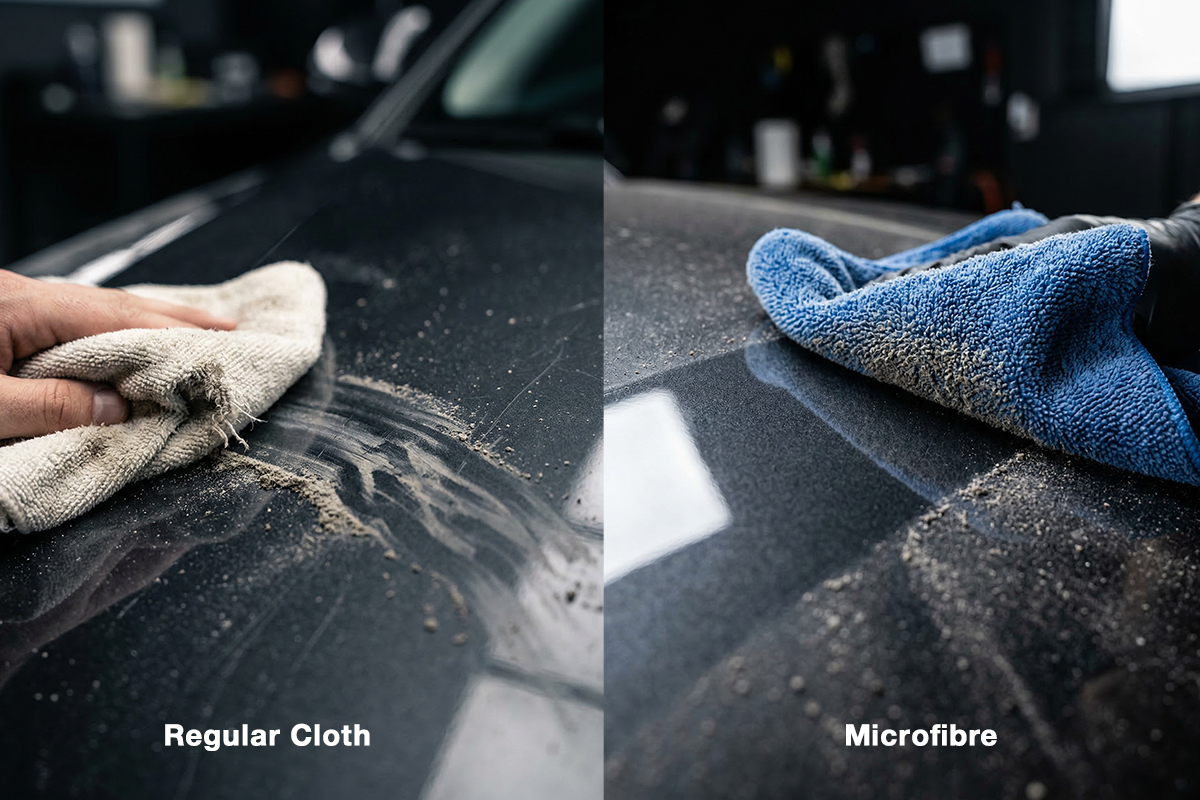
Cotton fibres are relatively thick and smooth, which means they do not trap dirt effectively. Instead, dirt particles can remain on the surface of the cloth and be dragged across paintwork.
This increases the risk of swirl marks and fine scratches, particularly on sensitive automotive finishes.
Cotton cloths can also produce lint, which may stick to glass and glossy surfaces, affecting the final finish.
Paper Towels
Paper towels are convenient but are not designed for automotive surfaces.
They can:
- leave lint behind
- tear easily
- create fine scratches on sensitive surfaces
- generate unnecessary waste
Because paper towels lack durability and dirt-trapping ability, they are not suitable for car detailing or paint care.
Because paper towels are disposable, they are also less environmentally friendly than reusable cleaning materials.
Microfibre Cloths
Microfibre cloths are specifically engineered for high-performance cleaning.
Their ultra-fine fibres capture and hold dirt particles, preventing them from scratching surfaces.
Key advantages include:
- superior absorbency
- lint-free cleaning
- reduced streaking
- improved surface safety
These characteristics make microfibre cloths ideal for cleaning paint, glass, chrome and interior surfaces.
Microfibre vs Cotton: Key Differences
Understanding how these materials compare makes it easier to choose the right cloth for car cleaning.
| Feature | Microfibre Cloths | Cotton Cloths |
| Dirt trapping | Excellent | Limited |
| Absorbency | Very high | Moderate |
| Lint-free | Yes | No |
| Surface safety | Scratch-resistant | Can cause scratches |
| Durability | Reusable | Limited lifespan |
Microfibre consistently outperforms cotton when it comes to automotive cleaning, detailing, and finishing.
The Best Choice for Car Cleaning
While cotton cloths and paper towels can still be useful for certain tasks, microfibre cloths offer clear advantages when it comes to automotive care.
For washing, drying, polishing, and detailing, microfibre cloths provide the safest and most effective solution.
For anyone looking to maintain their vehicle’s appearance while minimising the risk of scratches or streaks, microfibre cloths are the best choice.
FAQ: Microfibre vs Cotton for Car Cleaning
Yes, microfibre is better than cotton because it traps dirt within its fibres rather than dragging it across the surface, reducing the risk of scratches and swirl marks.
Yes, cotton cloths can scratch paint if dirt is trapped on the surface of the cloth and dragged across the vehicle during cleaning.
Microfibre cloths are made from tightly woven synthetic fibres that do not shed, making them ideal for cleaning glass and glossy surfaces.
Paper towels are not recommended for car cleaning as they can leave lint, tear easily, and cause fine scratches on sensitive surfaces.
Microfibre drying towels are the best option because they are highly absorbent and leave a streak-free finish.
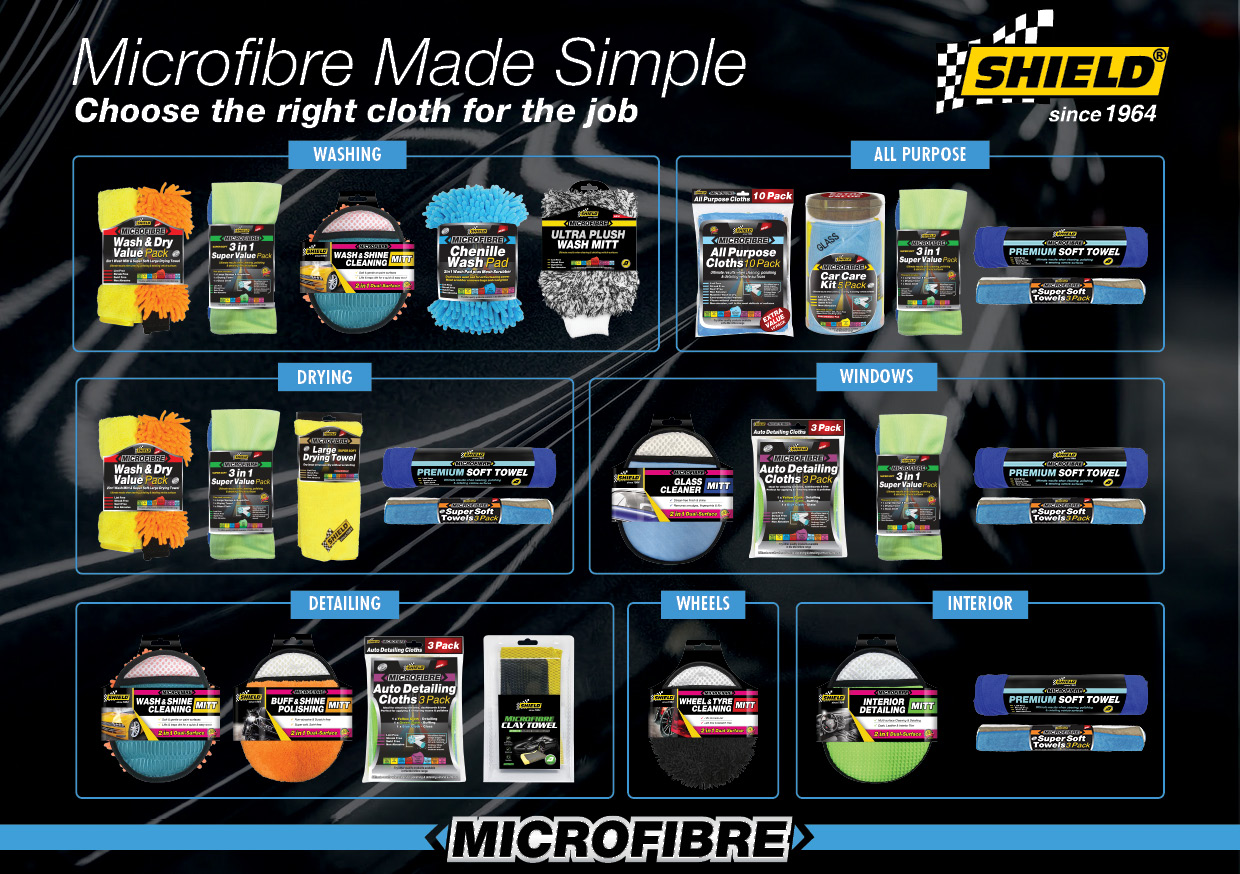
Explore Shield Chemicals Car Care Accessories
Browse our range of microfibre cloths and automotive cleaning accessories:
https://www.shopshield.co.za/collections/accessories-1